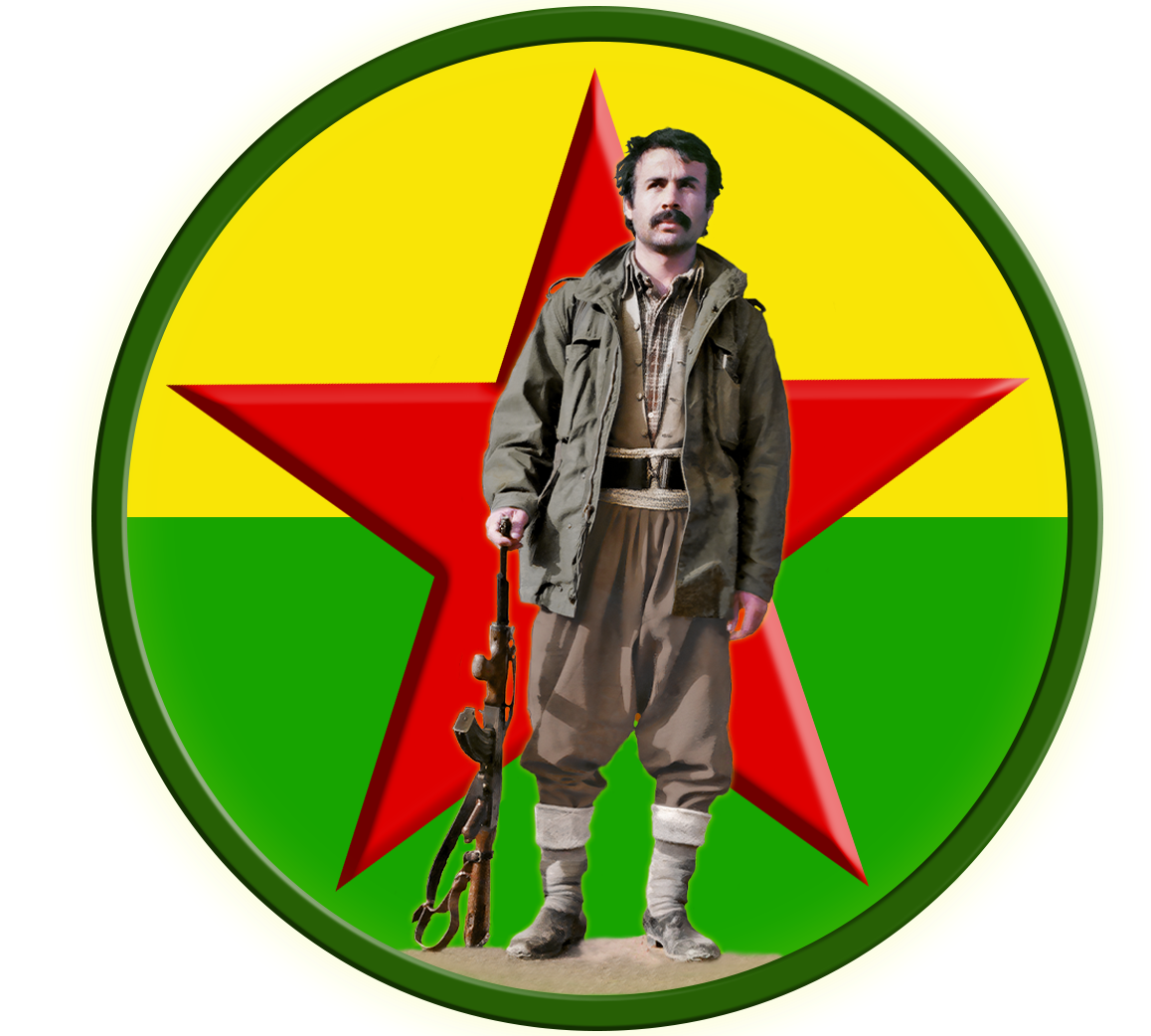
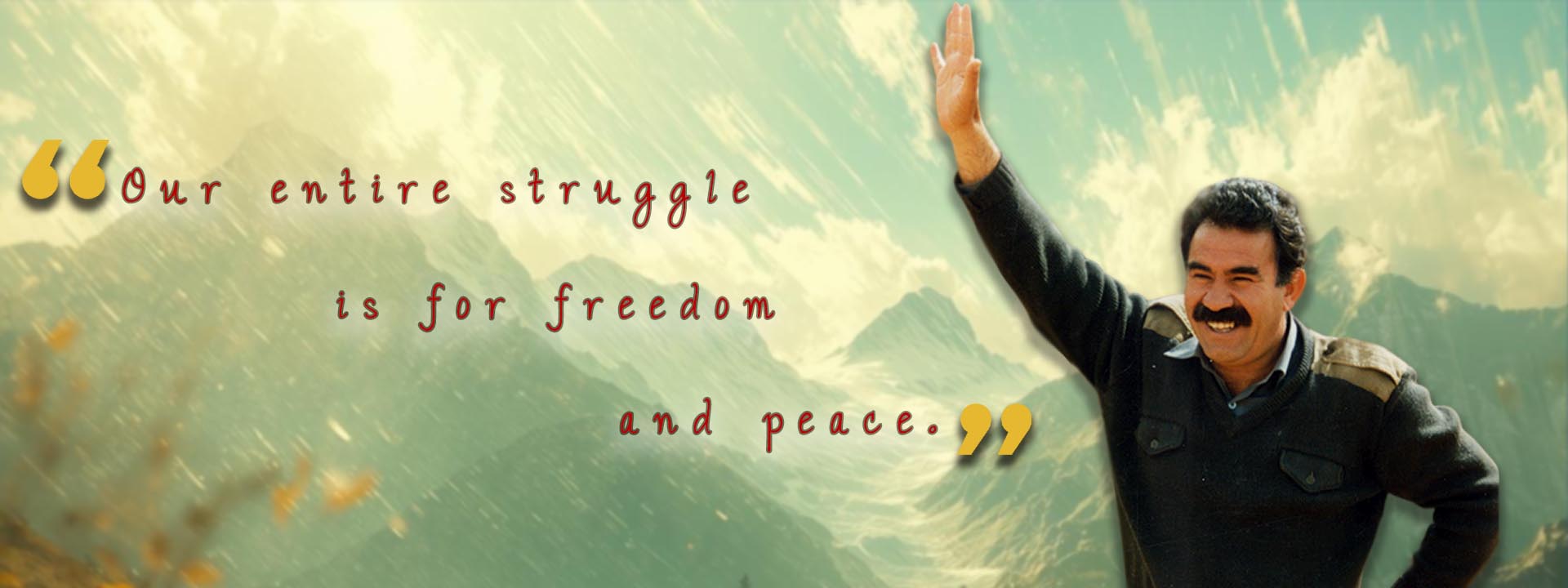

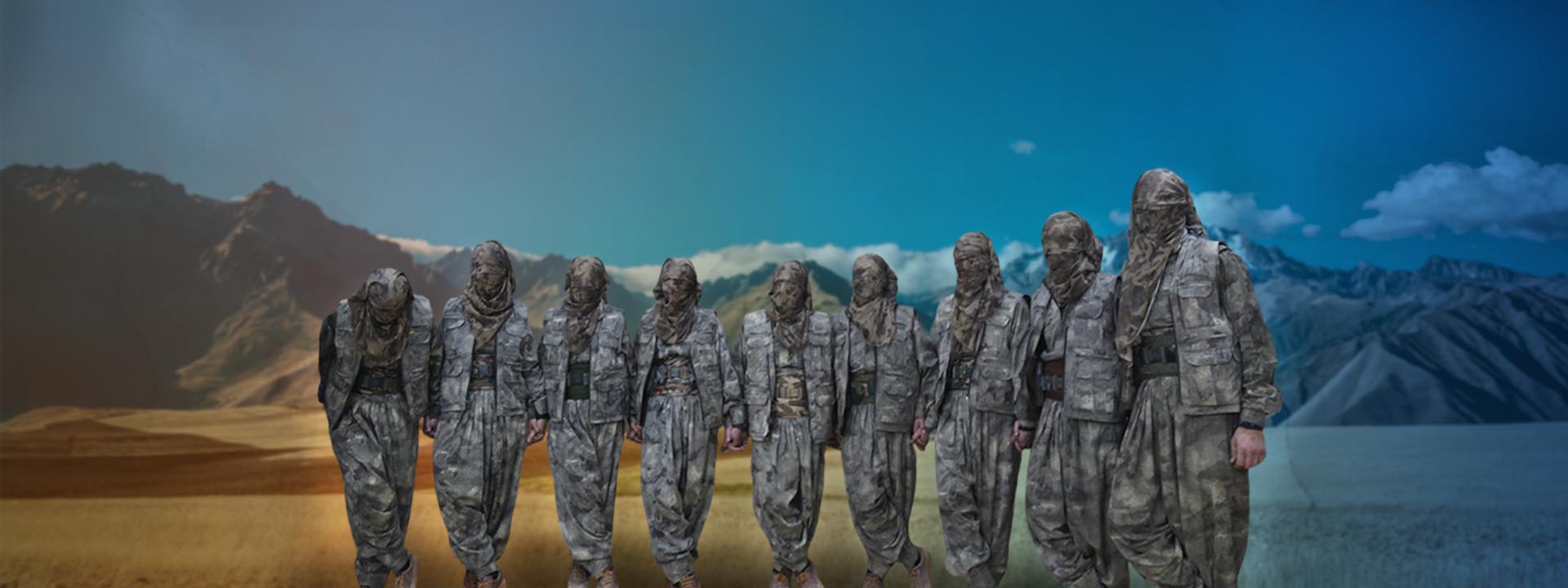

Harun Cudî is portrayed as a figure who responded to his time through labor and fulfilled every responsibility with dedication.
Wherever struggle exists, if it hosts existence and resistance, then that resistance and the effort invested in it are historical; as much as they are historical, they are also enduring and unmatched. The mountains of Kurdistan are a sacred center where countless historical moments are witnessed every day, where the unparalleled determination of struggle and resistance emerges. It is for this reason that every reality born and raised at the heart, summit or slopes of this sacredness becomes part of that very sacred reality.
The city of Qelenî (Çaldıran), located in Eastern Kurdistan (Rojhilatê Kurdîstan), also carries a deep historical legacy. It is an ancient city that has hosted countless acts of resistance within the lived reality of the Kurdish people, who have repeatedly fought to assert their existence. Harun Cudî, whose real name was Mecit Delayimilan, was born into a patriotic family in this ancient city. From an early age, he became aware of the geography he lived in and the deep-rooted reality of Kurdistan. He experienced, in the smallest details of his being, the sorrow of a land divided into four parts and the reality of denial imposed upon his people.
Rejecting the oppressive and reactionary mindset imposed by the Iranian religious regime, and standing against numerous policies of special warfare, Harun Cudî began his search at a young age. This search led him to become more closely acquainted with the Kurdistan Workers’ Party (PKK) and to embrace its struggle. The patriotic society in which he grew up instilled in him, at every moment, the reality of his people. Seeking to live a revolutionary way of life and to experience the depth of a philosophical perspective, Harun made several attempts to join the PKK and to develop his struggle in the free mountains.
He grew up with a life-filled smile, always curious about life in the mountains and about his comrades. Influenced by the way of life and the relationships among the first guerrillas he encountered, he felt great happiness in seeing the reality he had long imagined. By bringing his vibrant smile into the light, he revealed his true self. He dreamed, and he pursued those dreams. Because he knew that a life without dreams is a life without purpose.
He deeply understood the questions, “How can a person live without a goal? What is the dialectic between life and dreams?” and succeeded in giving depth to his own character through this awareness. Carrying this consciousness, Harun Cudî drew the attention of the Iranian religious regime from an early age. For this reason, he was conscripted into military service in the early years of his youth.
His conscription became a historical opportunity for him. During the short time he spent in the military, he closely analyzed his enemy and gained the chance to define it more clearly through these observations. Having grown up with a strong Kurdish consciousness, Harun believed he would struggle wherever he was and remained committed to living in loyalty to his dreams, no matter the circumstances.
Recognizing that it was meaningless to remain any longer within the ranks of the enemy, he deserted and turned his path toward the free mountains to which he belonged.
Dreams gain meaning when they are realized
He carried an unbounded desire for freedom in his heart, constantly dreaming and fighting against those who stood as enemies of freedom. Through this struggle, he came to know himself, the free mountains and the ideology of freedom to which he was deeply and unbreakably connected. In Serhed, where he joined the struggle, he associated his life-filled smile with life itself. He carried out his first year in the Serhed region with determination, enthusiasm and excitement, living it to the fullest. By delving into the depth of the training he received, he transformed this knowledge into a vital part of himself.
Through his devoted, modest and enthusiastic participation, he elevated himself and moved steadily toward the future. He knew that the steps he took in pursuit of truth would always lead him to a virtuous character, and within this awareness, he recreated himself every day. He became aware of the spirit of self-sacrifice and the way of life within him, shaping his existence in line with the philosophy of Abdullah Öcalan, to which he was deeply connected both emotionally and intellectually. He made continuous sacrifices in order to become a bearer of the resistance tradition of an Apoist militant.
Harun Cudî chose to respond to his time with the consciousness of existing through labor and an understanding of how life is created. He fulfilled every responsibility he undertook with dedication. Through the comradeship he embodied, worthy of an Apoist militant, he attained a historical character. Guided by Abdullah Öcalan’s words, “A militant is a militant everywhere,” he developed himself both ideologically and militarily in a short time.
Harun Cudî lived life to the fullest
Harun Cudî was loved as he loved, and with the warmth of love filling his heart, he turned his path toward Gılidax at a time when the war was at its most intense and fierce.
Self-sacrifice is another name for a boundless philosophical and devoted way of life. Harun Cudî, within the Kurdish freedom struggle to which he dedicated himself, stepped into eternity alongside his comrades Şerxwebûn Rêvan and Agirî Azadî on 5 October 2023, in the Gilîdaxin Kirê Halac region, and fell as a martyr.
Harun Cudî lived life to the fullest, leaving behind memories beyond description. In the mountains he had dreamed of, he became part of the truth he had devoted himself to, as a brave and fearless guerrilla. From the very first moment he stepped into eternity, he became a symbol of an enthusiastic character—one that created itself from the fire of freedom within the fabric of history and reality. The longing for his memory will ultimately turn what was once a dream into reality.